
24/7 emergency HVAC repair in Youngstown, OH
HVAC Guy answers emergency heating and cooling calls 24 hours a day, 7 days a week. If the house has no heat in freezing weather, a boiler is leaking, or the AC is down with a vulnerable person at home, call now and tell us what's happening.
Gas smell or carbon monoxide alarm: leave the house immediately. Don't use light switches, the thermostat, or a phone inside. From outside, call 911 and your gas utility.
Enbridge Gas Ohio serves most of the Youngstown area. An HVAC technician comes after the house has been made safe, to find and repair the equipment fault.
What counts as an HVAC emergency
An HVAC problem is an emergency when it threatens someone's safety or is about to damage the house. These situations qualify:
- No heat when it's at or below freezing outside. The risk is frozen and burst pipes, and danger to infants, elderly residents, and anyone who is ill.
- A carbon monoxide alarm, or symptoms such as headache, dizziness, and nausea that ease when you leave the house.
- Water leaking from a boiler, furnace, or attic air handler fast enough to damage floors or ceilings.
- A boiler relief valve discharging, or a pressure gauge near 30 psi.
- Burning smell, smoke, scorch marks, or sparking from any heating or cooling equipment.
- Flames visible outside the burner compartment of a furnace or boiler.
- No cooling during extreme heat with an infant, an elderly person, or someone with a heart or lung condition in the home.
- A breaker that trips again as soon as it's reset. Leave it off.
These can generally wait for a scheduled visit: one room that's cooler than the rest, a noisy but working system, an AC that cools poorly in mild weather, or a thermostat that needs replacing.
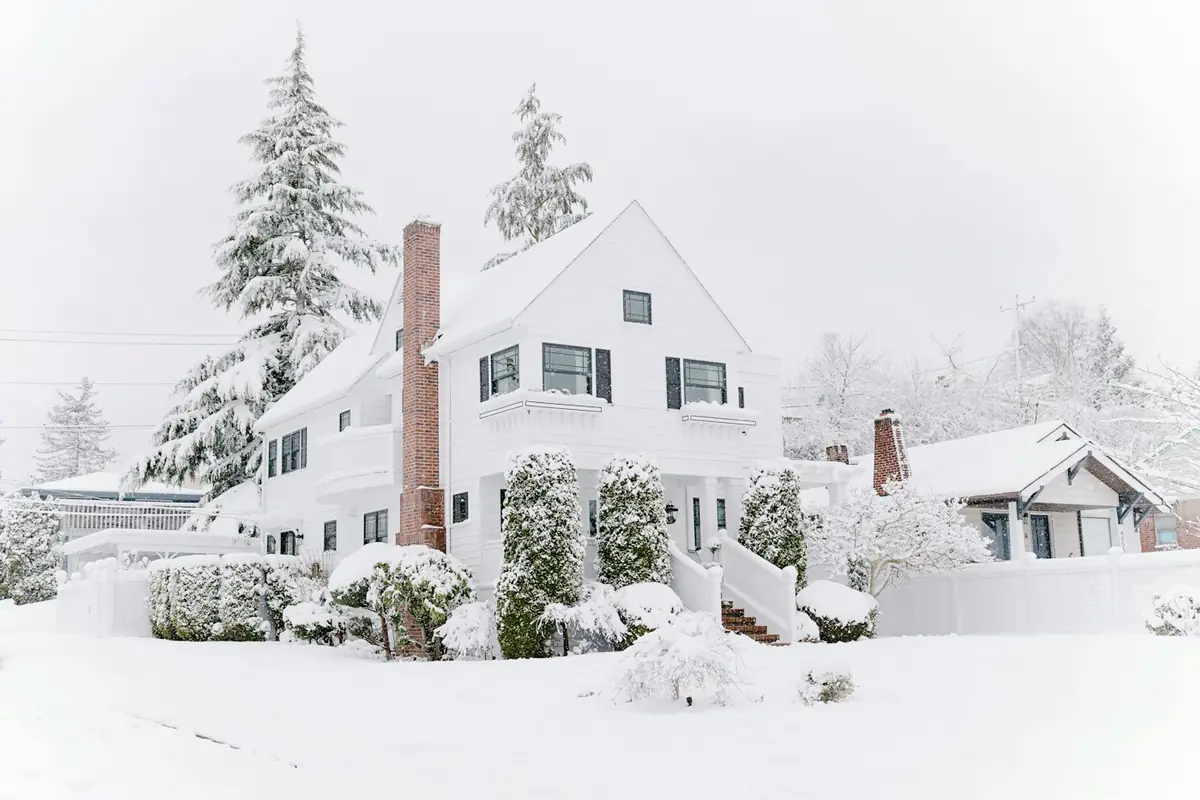
No heat or no AC? 2-Minute checks before you call
A fair number of emergency calls turn out to be one of these. Checking them costs nothing, and if one fixes it you have saved an after-hours visit.
- Thermostat. Set to heat (or cool), temperature set past the room reading, fresh batteries.
- Power switch. The furnace or boiler has a switch that looks like a light switch, on the unit or at the top of the basement stairs. It gets bumped off.
- Breaker. Look for one in the middle position. Reset it once only.
- Filter. A filter packed solid will shut a furnace down on overheat.
- Outdoor vent pipes. High-efficiency furnaces breathe through plastic pipes on the side of the house. Clear away snow and ice.
- Furnace door. The blower door must be fully seated or a safety switch keeps the furnace off.
- For AC: check that the outdoor disconnect is in, and look for ice on the refrigerant line. If there's ice, turn cooling off and leave the fan on.
If the furnace tries to light several times and fails, turn it off at the switch and call. Repeated failed ignition attempts are hard on the equipment.
What an emergency HVAC service call involves
On the phone we ask what the system is, what it's doing, the indoor temperature, and who is in the house. That decides how the call is prioritized. When the technician arrives, the first job is to make the situation safe: shut off gas or power to faulty equipment, stop a leak, or check for carbon monoxide.
Then comes the same diagnosis as any repair, done with meters and gauges: ignition sequence, safety switches, motors, gas pressure, refrigerant pressures, pump and control operation. If the part is on the truck, the repair is made on the spot.
If it has to be ordered, we get the system running temporarily where that can be done safely, or help you set up a way to keep the house above freezing until the part arrives. You're told the price before the repair is made.
Depending on the equipment, the full details are on our pages for furnace repair, boiler repair, air conditioner repair, and heat pump service.
Why no heat gets serious fast in Youngstown's older houses
Much of Youngstown's housing was built before modern insulation. Roughly 4 in 10 homes in the city predate 1940, and many have uninsulated wall cavities, stone or block basements, and original windows. When the heat goes out on a night in the teens or single digits, these houses lose temperature much faster than a newer, tighter home.
The plumbing layout adds to the risk. In older houses, supply pipes often run through exterior walls, unheated crawl spaces, or the rim of the basement, where they depend on heat leaking from the house to stay above freezing. Homes with radiators have water in pipes on every floor.
In a house like that, a furnace or boiler failure at midnight can mean frozen pipes by morning, and the water damage from a burst pipe costs far more than the heating repair. That's the reason we treat a no-heat call from an older home in freezing weather as urgent, and the reason you should call that night instead of waiting to see if it sorts itself out.
How to protect pipes and your home while you wait
- Open faucets to a slow, steady drip, both hot and cold, especially on outside walls.
- Open cabinet doors under kitchen and bathroom sinks so room air reaches the pipes.
- Close doors to unused rooms and gather in one area. Hang blankets over drafty doorways.
- Use electric space heaters plugged directly into wall outlets, kept 3 feet from bedding, curtains, and furniture. Don't leave them unattended or running while you sleep.
- Never heat the house with a gas oven, stove burners, a grill, or a generator indoors or in an attached garage. All of these produce carbon monoxide.
- Know where the main water shutoff is, in case a pipe does freeze.
- In summer: close blinds, run fans, drink water, and move anyone at risk to a cooler place such as a relative's house or a public building.
What affects emergency HVAC repair cost
An emergency repair is priced on the same things as any repair, plus timing.
- Time of the call. Nights, weekends, and holidays can carry a higher service rate than regular hours. Ask when you call, and we'll tell you.
- The failed part. An igniter or capacitor is a small repair at any hour. A blower motor, circulator, or control board costs more.
- Parts on hand. Common parts are carried on the truck. Brand-specific boards and motors may need a supplier that opens in the morning, which can mean a temporary fix and a return visit.
- Secondary damage. Water from a leak or an electrical short can add repairs.
- Access and conditions. Crawl spaces, attics, and buried outdoor units take longer.
If the equipment still runs and the house is holding temperature, it's reasonable to ask whether the repair can wait until regular hours. We'll give you an honest answer.
After an emergency furnace or AC repair
Ask the technician what caused the failure and whether it's likely to recur. Many emergency breakdowns trace back to something a routine maintenance check would have caught: a weak igniter, a swollen capacitor, a dirty flame sensor. If the unit was shut down as unsafe and can't be repaired, the next step is a furnace replacement or equivalent, and we'll go over safe ways to keep the house warm in the meantime.
HVAC Guy handles planned work too. Our local HVAC service in Youngstown covers repair, replacement, and new installation.
Emergency furnace and AC repair questions
Do you really answer the phone at 2 a.m.?
Yes. HVAC Guy takes emergency heating and cooling calls 24 hours a day, 7 days a week, including holidays.
How long can a house go without heat before pipes freeze?
It depends on the outdoor temperature, the insulation, and where the pipes run. In an older, poorly insulated house with pipes in outside walls, freezing can begin within several hours on a night in the teens. A well-insulated house may hold for a day or more. Dripping faucets and open cabinets buy time.
Is it safe to use space heaters overnight?
Not unattended. Use them while you're awake, plugged directly into a wall outlet with nothing within 3 feet, and turn them off before you sleep. Never use an extension cord or power strip with a space heater.
What should I do if my carbon monoxide alarm goes off?
Get everyone, including pets, outside into fresh air and call 911. Don't go back in until the fire department says it's safe. Then have the furnace, boiler, water heater, and venting inspected before using them again.
Does emergency service cost more than a regular visit?
After-hours calls can carry a higher service rate than a scheduled weekday visit. The repair itself is priced on the part and labor involved. Ask about the rate when you call so there are no surprises.
Heat or cooling out right now? Call HVAC Guy
We pick up at any hour. Have your address ready, the type of system, what it's doing, and the temperature inside the house. If there's a gas smell or a carbon monoxide alarm, get outside and call 911 first.