
Boiler installation and replacement in Youngstown, OH
A boiler needs replacing when the cast iron itself is leaking, when the burner compartment has rusted out, or when it can no longer be made to fire and vent safely. HVAC Guy replaces gas hot water and steam boilers and connects them to your existing radiators and piping.
Signs you need a boiler replacement
Boilers outlast furnaces by a wide margin, and most boiler problems are in replaceable parts around it. These are the conditions that end a boiler's life:
- Water seeping from between the cast iron sections or from the body of the boiler, as opposed to a valve or fitting.
- Rust flakes and scale piled on the burners, fallen from the underside of the sections.
- A steam boiler that needs water added every few days with no visible leak. The water is leaving as steam through a crack above the waterline, often seen as white vapor from the chimney.
- A burner tray, base, or jacket rusted through.
- Soot, flame rollout, or flue gas spillage that cleaning and adjustment don't correct.
- A cracked section found after a low-water or dry-fire event.
- Parts no longer available for the gas valve or controls on a very old unit.
A dead circulator, a waterlogged expansion tank, a dripping relief valve, or cold radiators are almost always repairs. Our boiler repair page covers those.
Choosing a new boiler: Hot water or steam, cast iron or condensing
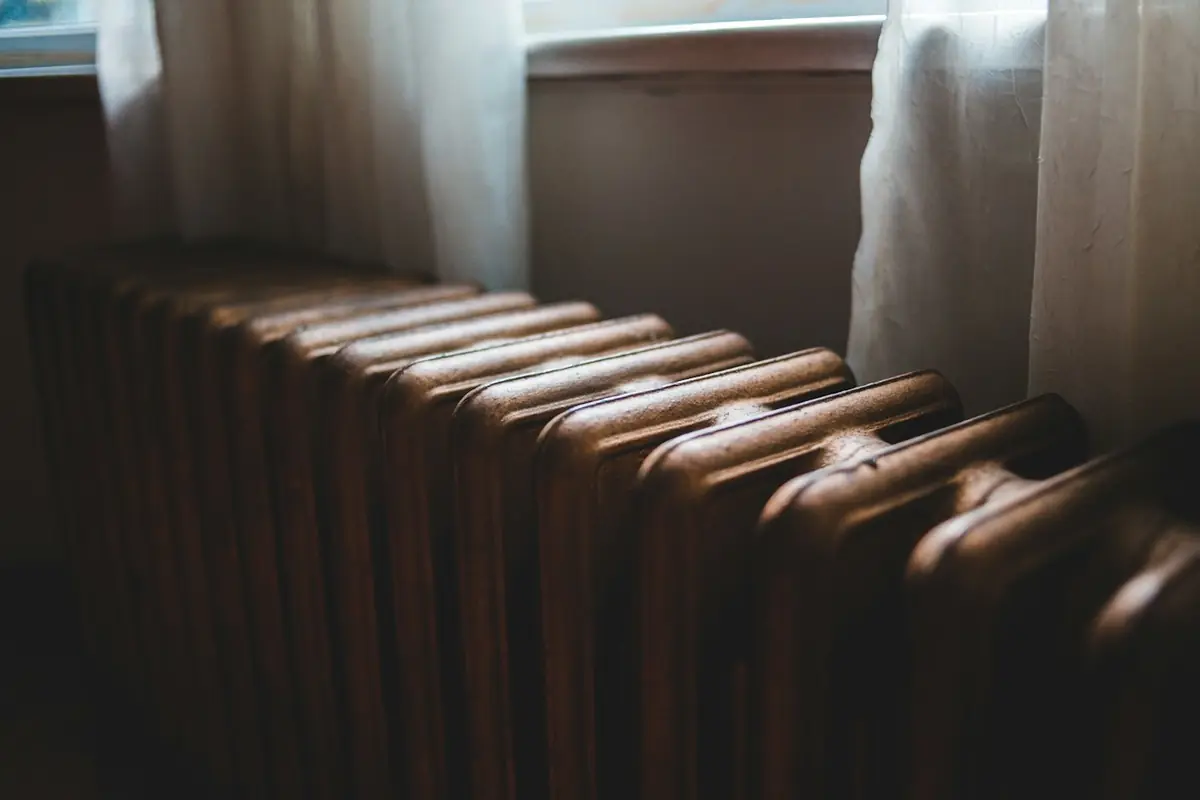
The new boiler has to match the system in the house. Steam systems get a steam boiler. Converting steam to hot water is rarely practical, because the piping and radiators are different.
For hot water systems there's a real choice:
- Cast iron, standard efficiency (about 82 to 85 percent). Simple, durable, tolerant of old piping, and vented through the chimney. A good match for large old radiator systems.
- High-efficiency condensing (90 to 95 percent). Wall-hung, vents through plastic pipe out a side wall, and modulates its flame to match the load. It reaches its rated efficiency only when the water returning from the radiators is cool, roughly under 130 degrees. Big cast iron radiators often allow that, which makes old houses better candidates than people expect. Condensing boilers need clean system water and annual service.
We explain what each would cost to install and what it would change for your house, and you decide.
Boiler sizing: Why old Youngstown boilers are usually too large
Many boilers in Youngstown's pre-war houses are replacements for original coal-fired units, and each replacement was sized by copying the one before it. The original was sized for a house with no insulation, loose single-pane windows, and in some cases the practice of heating with windows cracked open.
Since then the attic has been insulated, the windows replaced, and the walls perhaps blown full. The house may now need half the heat the nameplate in the basement says.
An oversized boiler short cycles, wastes gas, and wears out its controls. So we don't size from the old label.
- For hot water, we calculate the home's heat loss as it stands today, then confirm the radiators can deliver that heat.
- For steam, the boiler must match the radiators. Every radiator is measured and its output (called EDR, in square feet of radiation) is added up, because a steam boiler has to produce enough steam to fill all of them at once. Too small and the far radiators never heat. Too large and it cycles on pressure all day.
In practice the correctly sized boiler for an older Youngstown house is often one or 2 sizes smaller than the one coming out, which lowers both the equipment price and the gas bill.
What boiler replacement involves
- The system is drained, and gas, water, and power are shut off and disconnected.
- The old boiler is taken apart if needed and carried out. Old cast iron units are extremely heavy and often have to be broken down into sections to get up the basement stairs.
- The new boiler is set and leveled.
- The piping at the boiler is rebuilt. On steam, the header and equalizer are piped to the manufacturer's dimensions in threaded steel, because that piping is what dries the steam. On hot water, a new circulator, air separator, expansion tank, fill valve, and backflow preventer are installed.
- Venting is connected: into a lined chimney for standard boilers, or new plastic vent pipes through a wall for condensing models.
- Gas piping is connected and leak tested. Controls, thermostat, and safeties are wired.
- The system is filled and purged of air. A new steam boiler is skimmed to remove the oils left from manufacturing, which otherwise cause surging and banging.
- The boiler is fired, combustion is tested, safety controls are checked, and every radiator is confirmed hot.
Most replacements take one to 2 days. Radiators and piping in the house stay where they are.
What affects new boiler cost
- Steam or hot water. Steam replacements involve more threaded pipework at the boiler.
- Size and efficiency. Larger and condensing boilers cost more. The big homes around Crandall Park are at the top of the range.
- Near-boiler piping and components. Circulators, zone valves, expansion tank, and controls that are replaced at the same time.
- Venting. A stainless or aluminum chimney liner for a standard boiler, or new sidewall venting and a condensate drain for a condensing one.
- Removal. Breaking down and hauling out a very large old boiler.
- Asbestos. Insulation on the old boiler or the pipes around it must be removed by a licensed abatement contractor before our work starts. That's a separate cost and schedule.
- Access. Low stone basements and narrow stairs slow the job.
- Hot water. If the old boiler also heated domestic water through a coil, a separate water heater or an indirect tank is needed.
- Permit fees.
You receive a written price after the house and radiators have been measured.
When you need an emergency boiler replacement
A boiler that has cracked or been shut down as unsafe in the middle of winter is an emergency, because every radiator and pipe in the house is full of water. If the boiler can't be run and it's freezing outside, call us immediately. Keep the house above freezing with electric space heaters used safely, and open faucets to a drip.
If the house can't be kept warm, the heating system may need to be drained to protect the radiators from splitting. We take these calls through our 24/7 emergency service.
After your new boiler is installed
Expect some air noise in a hot water system for the first few days as the last bubbles work out. On steam, the water in the sight glass may look cloudy for a week or 2, and a follow-up skim is sometimes needed. Check the pressure gauge weekly during the first season.
Have the boiler serviced each fall. If you want cooling in a radiator-heated house, a ductless mini-split system adds it without ductwork. For everything else we do, see our main page for Youngstown heating and cooling service.
Boiler installation and replacement questions
How long does a boiler last?
Cast iron boilers commonly run 25 to 40 years and sometimes longer. Condensing boilers have a shorter expected life, typically 15 to 20 years, and depend more on annual maintenance and clean water.
Should I switch from a boiler to a furnace?
Usually not. A furnace needs a full duct system, which means cutting into walls, floors, and ceilings throughout the house. If the radiators and pipes are sound, a new boiler keeps the even, quiet heat at a lower total cost.
Will a new boiler work with my old radiators?
Yes. Cast iron radiators rarely wear out. The new boiler connects to the existing piping, and the radiators stay in place.
Can a steam system be converted to hot water?
It's possible in some two-pipe systems but seldom worth it. Old steam piping and radiators weren't built to hold water under pressure, and leaks often appear after conversion. Replacing a steam boiler with a correctly sized steam boiler is the dependable route.
How long will I be without heat?
One to 2 days for most replacements. If the work is done in cold weather, plan for electric space heaters in the rooms you use during that time.
Not sure whether your boiler can be saved?
Call HVAC Guy. We'll find where the water or the fault is coming from and tell you whether it's a repairable part or the boiler itself. If it's the boiler, we'll measure the house and the radiators before quoting a replacement.