
Boiler repair in Youngstown, OH
HVAC Guy repairs gas-fired hot water and steam boilers, along with the pumps, valves, tanks, and radiators connected to them. If radiators are cold, the pressure gauge is off, or there's water on the floor around the boiler, call and describe what you see.
Hot water or steam boiler: Which kind do you have?
The 2 types fail in different ways, so it helps to know which one is in your basement.
- Hot water (hydronic) boiler. Heats water to roughly 140 to 180 degrees and pumps it through radiators or baseboard. Look for a circulator pump on the piping, an expansion tank, and a gauge that reads both pressure and temperature. Normal cold pressure for a 2-story house is about 12 to 15 psi.
- Steam boiler. Boils water and sends steam up to the radiators under its own pressure. Look for a glass sight tube showing the water level and a small vent on the side of each radiator. There's no circulator pump.
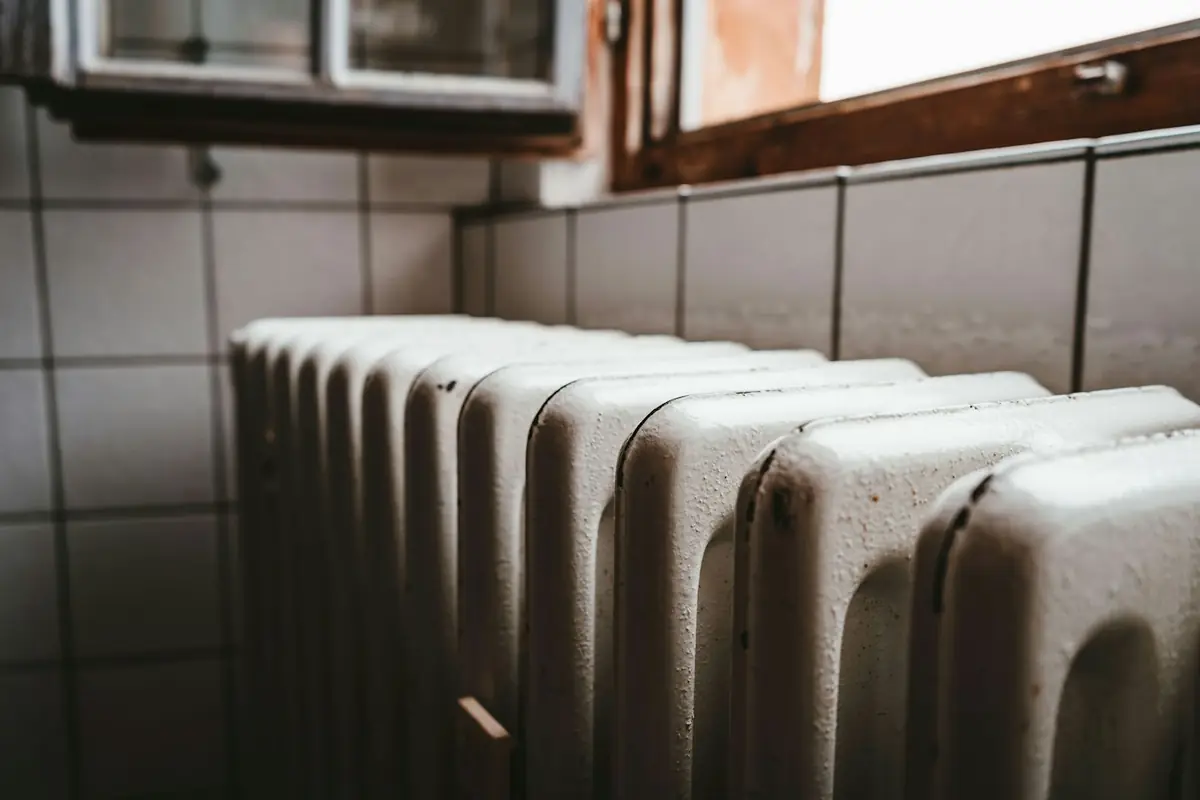
Signs a boiler needs repair
- Some or all radiators stay cold while the boiler runs.
- Banging or hammering in the pipes when the heat comes on.
- Gurgling or rushing water sounds in radiators or baseboard.
- Water dripping from the relief valve pipe on the side of the boiler, or a puddle under it.
- The pressure gauge reads near zero or climbs toward 30 psi as the boiler heats.
- The boiler fires for a short time and shuts off before the house is warm.
- A pilot light that won't stay lit, or burners that don't light at all.
- Radiator vents that hiss constantly or spit water on a steam system.
- Rust streaks, white mineral crust, or damp spots on the boiler sections or at pipe joints.
Common causes of boiler and radiator problems
Hot water boiler problems
- Air in the system. Air collects at the top of radiators and blocks water flow. The top stays cold while the bottom is warm.
- Failed circulator pump. The boiler gets hot but the heat stays in the basement. The pump may be silent, humming, or hot to the touch.
- Waterlogged expansion tank. The tank gives heated water room to expand. When it fails, pressure spikes on every cycle and the relief valve drips.
- Stuck zone valve. One floor or area never gets heat while the rest of the house is fine.
- Bad pressure-reducing (fill) valve. Pressure drifts too low to push water to the second floor, or creeps too high.
Steam boiler problems
- Failed radiator or main vents. Steam can't enter a radiator until the air gets out. A stuck vent leaves the radiator cold. A vent stuck open hisses and leaks steam.
- Pipes or radiators that have lost their pitch. Condensed water pools instead of draining back, and incoming steam slams into it. That's the banging.
- Low water cutoff tripping. A safety that shuts the burner off when the water level drops. Sediment can also foul it and cause false shutdowns.
- Dirty or surging boiler water. Oil and sludge make the water line bounce and throw water up into the pipes.
Problems on either type of boiler
Thermocouple and pilot failures, ignition control faults, a bad aquastat or pressure control, a failed gas valve, and a blocked flue or chimney that trips the spill switch.
What boiler repair involves
The technician starts with the gauge readings and the controls: is the thermostat calling, is the burner firing, is the boiler reaching temperature or pressure, and is the heat leaving the boiler. On a hot water system we check the circulator, feel supply and return pipes for temperature difference, test the expansion tank's air charge, and bleed air from radiators. On a steam system we check the water level, the low water cutoff, the pressure control setting, the main vents, and the pitch of problem radiators.
Common repairs include replacing a circulator or its cartridge, replacing or recharging an expansion tank, swapping a relief valve, fill valve, or zone valve head, replacing steam vents, flushing a low water cutoff, and replacing a thermocouple or igniter. Several of these require partly draining the system, then refilling it, purging air, and bringing the pressure back to the correct setting.
Before leaving, we run the boiler up to its operating limit, confirm the safety controls shut it down as designed, check the flue for proper draft, and walk through the house with you to confirm each radiator is heating.
Why so many Youngstown homes still have boilers and radiators
Youngstown grew fastest in the first decades of the 1900s, when steam and hot water were the standard way to heat a well-built house. Roughly 4 in 10 homes in the city date from before 1940, and in districts like Wick Park, where late Victorian and Craftsman houses surround the park, cast iron radiators are the norm. Many of those systems are close to a century old, and the piping and radiators are often in better shape than the boiler that feeds them.
That history matters for repair in 2 ways. First, an old gravity hot water system that was later fitted with a circulator pump has very large pipes holding a lot of water, so it heats slowly, takes longer to drain and purge, and needs a correctly sized expansion tank. Second, one-pipe steam systems were balanced by the original installer using pipe pitch and vent sizes.
Decades of settling floors, swapped radiators, and painted-over vents throw that balance off. Most of the banging and cold-radiator complaints we see in these houses come from the piping and vents, and they're usually fixable without replacing anything major.
Boiler repair cost: What affects the price
- The part. Radiator vents, thermocouples, and relief valves are inexpensive. Circulators, zone valves, gas valves, and ignition controls cost more.
- Whether the system must be drained. Draining, refilling, and purging a large older system adds hours.
- Steam or hot water. Steam problems that involve re-pitching pipes or radiators take more labor to trace.
- Seized fittings. Old valves and unions can be corroded in place and need extra work to free without damaging the pipe.
- Asbestos pipe insulation. If the repair is under old white pipe wrap, that material has to be handled by a licensed abatement contractor first.
- Parts for older boilers that have to be ordered.
- After-hours emergency timing.
A leak from the cast iron sections themselves is generally not repairable and means boiler replacement. We'll show you where the water is coming from so you can see whether it's a fitting or the boiler body.
When you need emergency boiler repair
- No heat with outdoor temperatures near or below freezing. Radiator systems hold water throughout the house, so a freeze can split radiators and pipes on every floor.
- The relief valve is discharging steadily, or the pressure gauge is at or near 30 psi. Turn the boiler off at its switch.
- Water is pouring or spraying from the boiler or piping. Shut the boiler off and close the cold water feed valve.
- The sight glass on a steam boiler is empty. Shut the boiler off and don't add water to a hot boiler, since cold water on overheated cast iron can crack it.
- A carbon monoxide alarm sounds, or you see soot at the draft hood. Leave the house and call 911.
We answer emergency heating calls day and night.
Boiler maintenance after the repair
Look at the gauge every week or 2 during heating season so you know what normal looks like. On steam systems, check the water level weekly and flush the low water cutoff as the technician shows you. Keep radiator vents and valves free of paint.
If you want cooling in a radiator-heated house, see how we handle air conditioning installation without ductwork. HVAC Guy works on forced-air systems as well, as part of our heating repair service in Youngstown.
Boiler repair and radiator questions
Why are my pipes banging when the heat comes on?
On a steam system, banging is water hammer: steam hitting water that has pooled in a pipe or radiator that no longer slopes back toward the boiler. On a hot water system, banging or ticking is usually pipes expanding against wood framing, or air in the lines.
How do I bleed a radiator?
On a hot water system, with the heat running, open the small bleed valve at the top of the radiator with a radiator key until the hissing stops and water appears, then close it. Check the boiler pressure afterward. Steam radiators aren't bled. Their vents release air automatically.
What should the pressure be on my boiler?
A hot water boiler in a 2-story home typically reads 12 to 15 psi cold and a few pounds higher when hot. The relief valve opens at 30 psi. A residential steam boiler runs at very low pressure, usually under 2 psi.
How long do boilers last?
Cast iron boilers commonly last 25 to 40 years or more, far longer than a furnace, as long as they aren't fed large amounts of fresh water. Constant refilling brings in oxygen and minerals that corrode the sections from the inside.
Do you work on steam boilers?
Yes. We repair both one-pipe and two-pipe steam systems, including vents, traps, low water cutoffs, pressure controls, and piping pitch problems.
Cold radiators or a leaking boiler? Call HVAC Guy
Before you call, look at the gauge on the front of the boiler and note the pressure and temperature. If it's a steam boiler, look at the water level in the glass tube on the side. Those readings tell us a lot before we're in the driveway.