
AC repair in Youngstown, OH
When an air conditioner runs without cooling, freezes into a block of ice, or won't start at all, the cause is usually electrical, airflow, or refrigerant. HVAC Guy tests all 3, tells you which one it is, and makes the repair.
Signs your air conditioner needs repair
- Warm air from the vents. The indoor fan runs but the air is room temperature.
- The outdoor unit hums and the fan doesn't spin. Or the fan spins and the compressor never kicks in.
- Ice on the copper line or the indoor coil. Frost on the larger insulated pipe at the outdoor unit is the visible sign.
- Water around the furnace or air handler. A puddle on the basement floor or a stain on the ceiling below an attic unit.
- Short runs. The system starts, runs 2 or 3 minutes, and shuts off, over and over.
- The house feels clammy. The thermostat reaches its setting but the air stays damp.
- Loud startup or shutdown. A hard clunk, a buzz, or a screech from the outdoor unit.
- The breaker trips. The outdoor unit trips its breaker when it tries to start.
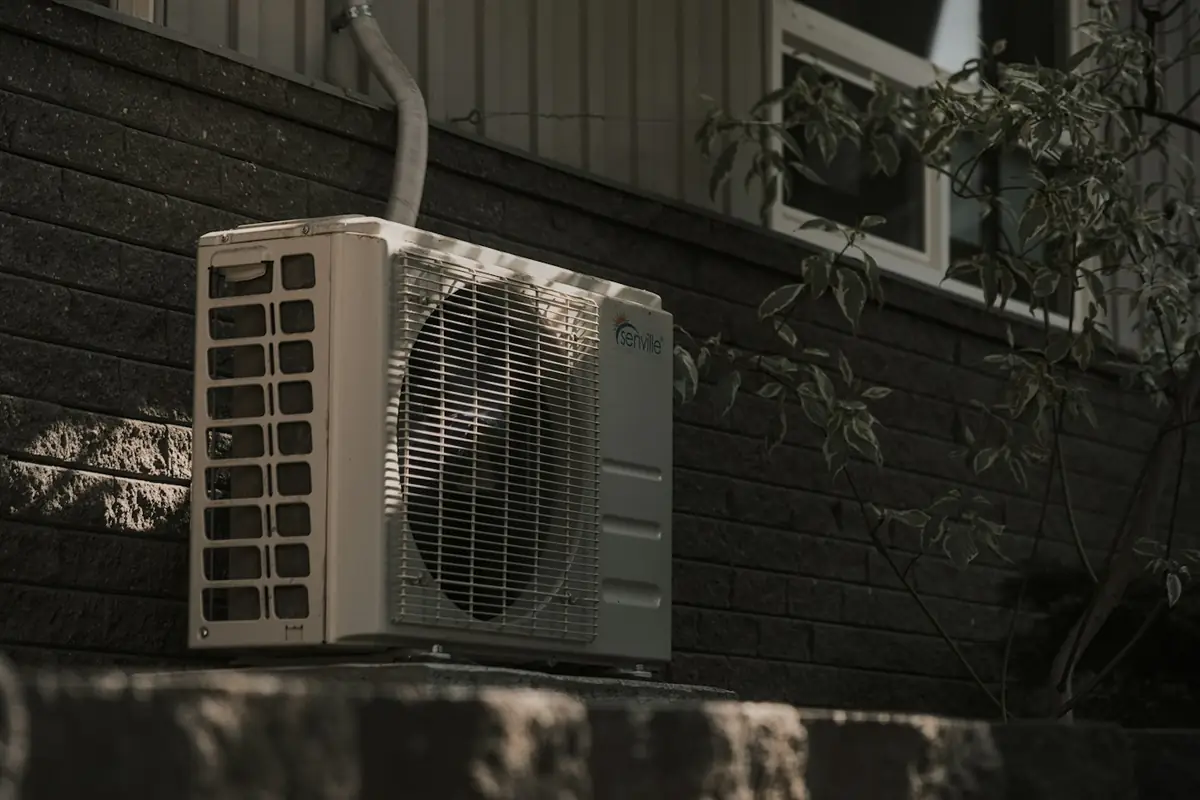
AC running but not cooling: Common causes
Failed capacitor or contactor. These 2 electrical parts start and run the compressor and fan motor. Heat wears them out, and they account for a large share of summer breakdowns. A swollen capacitor or a pitted contactor is usually visible once the panel is off.
Restricted airflow. A clogged filter, a dirty indoor coil, or a failing blower motor starves the coil of warm air. The coil drops below freezing, ice builds, and airflow falls further until the vents barely blow.
Low refrigerant. Refrigerant stays in a sealed loop for the life of the system. If the charge is low, there's a leak, typically at the indoor coil, a service valve, or a brazed joint. Low charge also freezes the coil, which is why ice alone doesn't tell you the cause.
Dirty outdoor coil. Cottonwood fluff, grass clippings, and dryer lint mat the condenser fins. The unit can't reject heat, pressures climb, and the compressor overheats and shuts down on its internal protector.
Clogged condensate drain. Algae and dust plug the drain line. Water backs up into the pan and either overflows or trips a float switch that shuts the system off.
How air conditioner repair is diagnosed and completed
We begin at the thermostat and work outward: is there a call for cooling, is 24 volts reaching the outdoor unit, is the contactor pulling in, are the compressor and fan drawing normal amperage. Capacitors are tested with a meter against their rated value.
If the electrical side checks out, gauges go on the system. Suction and head pressure, along with superheat and subcooling readings, show whether the charge is correct, low, or whether there's a restriction. We also measure the temperature drop across the indoor coil and look at the filter, blower wheel, and coil face.
When the charge is low, the right repair is to find the leak with an electronic detector or dye, fix it if it's accessible, pull a vacuum, and weigh in the correct charge. Adding refrigerant without finding the leak means paying for the same refrigerant again next summer. If the leak is in the indoor coil of an older unit, we'll give you the cost of a coil against the cost of replacing the air conditioner.
The visit ends with the drain line cleared, the outdoor coil rinsed if it needs it, and the system run long enough to confirm steady pressures and a normal temperature drop.
Why second floors in older Youngstown homes are hard to cool
A large part of Youngstown's housing was built decades before central air existed. In a typical 2-story house from the 1920s through the 1950s, the ducts were laid out to deliver heat, which rises on its own. Supply runs to the second floor are small, and there are often no return air grilles upstairs at all.
Cooling works against that layout. Cold air is heavy and has to be pushed up, and the warm air upstairs has no path back to the unit. So the air conditioner runs for hours, the first floor gets cold, and the bedrooms stay 5 to 10 degrees warmer.
Homeowners often assume the unit is low on refrigerant or too small. We check the equipment first, and when it tests fine we tell you plainly that the limit is the ductwork. Options then include duct repairs such as adding a return on the second floor, sealing leaky ducts in the basement, and balancing dampers, or a ductless unit for the upstairs.
A bigger outdoor unit on the same ducts leaves the upstairs warm and makes the humidity worse.
What affects AC repair cost
- The failed component. Capacitors, contactors, and drain cleanings are minor. Fan motors and leak repairs are mid-range. A compressor or coil replacement is a major repair.
- Refrigerant type and amount. Systems built before 2010 generally use R-22, which is no longer produced and is expensive. Newer systems use R-410A or the more recent R-454B and R-32, and they aren't interchangeable.
- Leak location. A leak at an accessible fitting is a simple fix. A leak inside the indoor coil usually means replacing the coil.
- Where the indoor unit sits. An air handler in a hot, low attic takes more time than one beside a basement furnace.
- Warranty status. A part may still be covered by the manufacturer, which leaves labor and refrigerant.
- After-hours timing. Night and weekend emergency calls can cost more.
When you need emergency AC repair
Loss of cooling is an emergency when someone in the home is elderly, an infant, or has a heart or breathing condition, and the indoor temperature is climbing during a stretch of hot, humid weather. It's also urgent if water is coming through a ceiling from an attic unit, if the outdoor unit is tripping its breaker repeatedly, or if you smell burning from the air handler.
Shut the system off at the thermostat and call. We take emergency cooling calls at any hour.
A unit that cools poorly but still runs can usually wait for a scheduled visit. Don't keep running a system that's iced over, since liquid refrigerant returning to the compressor can destroy it.
What to do before the AC technician arrives
Check the filter and replace it if it's gray. Make sure the outdoor disconnect and the breaker are on.
If you see ice, set the thermostat to off and the fan to on for a few hours. Clear leaves and debris away from the outdoor unit so there's about 2 feet of open space around it.
How to keep an AC repair from coming back
After a repair, check the filter monthly through the summer and keep shrubs trimmed back from the outdoor unit. If the fix was a refrigerant recharge without a located leak, watch for the same loss of cooling returning within a season.
For homes that heat and cool with one outdoor unit, see heat pump service. HVAC Guy handles both sides of the system as a Youngstown heating and air conditioning company, so the same technician can look at the furnace blower and the cooling coil in one visit.
Air conditioner repair questions homeowners ask
Why is my air conditioner freezing up?
Ice forms when the indoor coil drops below 32 degrees. That happens for 2 reasons: not enough air moving across the coil (a dirty filter, dirty coil, or weak blower) or not enough refrigerant in the system because of a leak. Turn the system to fan only to thaw it and have the cause tested.
Can you just add refrigerant?
We can, but a system that's low has a leak, and the refrigerant will escape again. For a small, slow leak on an older unit a recharge can buy a season or 2. The lasting repair is to find and fix the leak first.
Why is there water on the floor by my furnace in summer?
The cooling coil above the furnace pulls moisture out of the air, and that water runs to a drain. When the drain line clogs, the pan overflows. Clearing the line and trap usually solves it. Left alone, the water can rust the furnace and damage its control board.
How long should a central air conditioner last?
Many systems run 12 to 17 years with regular maintenance. Units that have been run with dirty coils or a low charge for long periods tend to lose their compressors earlier.
My AC is cooling but the house feels humid. What's wrong?
An oversized air conditioner cools the air quickly and shuts off before it has run long enough to remove moisture. A fan set to on instead of auto also blows moisture off the coil back into the house. Check the fan setting first, then have the system sizing and airflow looked at.
Air conditioner not keeping up? Call HVAC Guy
If the coil is iced over, switch the system to fan only before we get there so it thaws. A frozen coil can't be tested. Then call and tell us whether the outdoor fan is spinning and whether the air from the vents is cool, warm, or barely moving.